


Table of Contents
- Start With the Silhouette: The Foundation of Formal Jumpsuit Styling
- What Shoes to Wear With a Formal Jumpsuit
- Jewelry for a Formal Jumpsuit: Metal, Scale, and Statement Pieces
- Belts and Waist Definition: When to Cinch and When to Skip
- What to Wear Over a Formal Jumpsuit: Blazers, Shrugs, and Layers
- Formal Jumpsuit Outfit Ideas by Occasion and Dress Code
- Accessory Swaps That Change the Whole Outfit
- Conclusion
- Frequently Asked Questions
Last Updated: October 21, 2026
Start With the Silhouette: The Foundation of Formal Jumpsuit Styling
Learning how to accessorize a formal jumpsuit starts with the shape, not the jewelry box. A formal jumpsuit is a one-piece outfit cut from elevated fabric and finished for dressy events, so every accessory either sharpens the silhouette or fights it.
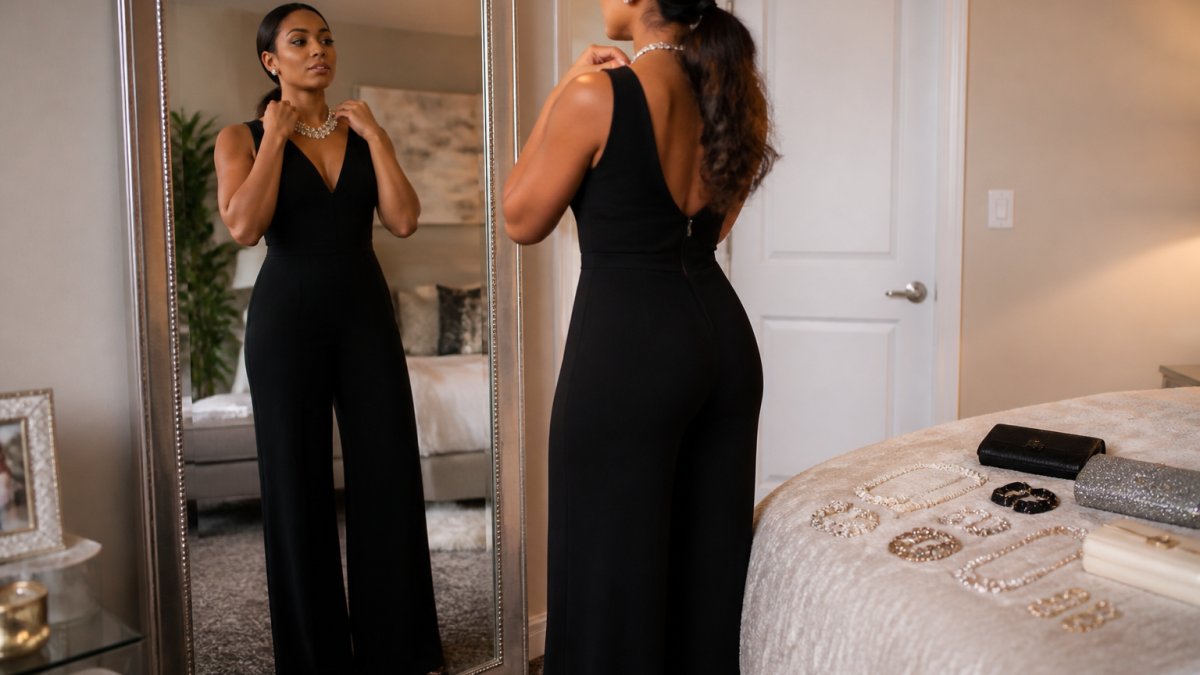
Halter necks, one-shoulder cuts, and deep V necklines each leave different skin bare. That bare space is where your jewelry lives.
Neckline Cheat Sheet: What to Hang Where
- Halter: skip the necklace, go big on earrings
- Deep V: one pendant on a fine chain, nothing chunky
- One-shoulder: earrings on the bare side only
- Strapless: a collar or choker fills the space
What Shoes to Wear With a Formal Jumpsuit
The short answer: a strappy heel or clean block heel, matched to the leg width. Wide-leg and culotte cuts need height and a pointed or open toe so the hem doesn't swallow your foot.
Most guides tell you to grab the tallest stiletto in your closet. In practice, a platform wedge or sandal wedges give the same leg-lengthening effect with far more stability on dance floors and uneven venue floors.
For a party-ready finish, our Happier clear thin strappy block heels pair with nearly any formal jumpsuit because the clear strap keeps the leg line unbroken. If you want a chunkier, more grounded look, the Pensy clear sandal heels do the same job with an open toe and slip-on design.


Heels, Wedges, and When to Skip the Stiletto
- Wide-leg or culotte: block heel, platform wedge, or pointed pump
- Tapered or slim: strappy heel, flat mule, or sleek loafer
- Long hem: always add height, or get it tailored
- Outdoor or garden venue: wedges beat stilettos every time
Pro Tip
Bring your jumpsuit to the shoe decision, not the other way around. Hem length changes everything, and a half inch of extra heel can be the difference between "polished" and "pooling fabric."
Jewelry for a Formal Jumpsuit: Metal, Scale, and Statement Pieces
Jewelry for a formal jumpsuit should follow one rule: pick a single focal point.
Match your metal to your hardware: gold buttons, zippers, or belt hardware call for gold; silver details call for silver jewelry.
Statement jewelry earns its place when the neckline is simple. A high-neck or halter cut leaves room for dramatic earrings. A strapless or sweetheart neckline invites a collar or layered chain.
Watch Out
The most common mistake we see is wearing a statement necklace with a halter neckline. The straps and the necklace compete for the same space, and the result looks busy instead of bold.
Belts and Waist Definition: When to Cinch and When to Skip
A belt can transform a formal jumpsuit, but only when the cut allows it. Cinch the waist if the jumpsuit is loose through the middle, has a defined waist seam, or comes in a fluid fabric that needs structure.
Skip the belt if the jumpsuit already has a fitted bodice, a peplum, or heavy embellishment at the waist. Adding a belt there just adds bulk.
- Wide-leg with soft fabric: add a slim or medium belt
- Tailored bodice: skip the belt entirely
- Plus a blazer: belt under the blazer, not over it
- Petite frame: keep the belt narrow so it doesn't cut you in half
What to Wear Over a Formal Jumpsuit: Blazers, Shrugs, and Layers
What to wear over a formal jumpsuit comes down to temperature, dress code, and proportion. A tailored blazer is the safest layer for weddings, evening events, and anything labeled "cocktail" or "formal", it sharpens the shoulders and makes a one-piece outfit read as a complete suit.
The layer has to cooperate with the jumpsuit's cut, not just its color. Most layering problems come from three mismatches: length, fabric weight, and neckline conflict.
Match the Layer to the Jumpsuit's Cut
- Wide-leg jumpsuit: choose a cropped blazer that ends at or above the waist seam. A long blazer over a wide leg adds visual width at the hip and shortens the leg line.
- Tapered or slim-leg jumpsuit: a hip-length blazer or a fitted moto-style jacket works because the narrow leg balances the added volume on top.
- Halter or one-shoulder neckline: skip collared blazers, which fight the straps. A shrug, a cropped bolero, or a drape-front jacket keeps the neckline visible.
- Strapless or sweetheart neckline: a cropped jacket with a clean shoulder line frames the bare neckline without covering it. Avoid anything with a high collar.
Fabric Weight and Season
Match the layer's fabric weight to the jumpsuit. A heavy wool blazer over fluid satin looks like two outfits stacked; a lightweight crepe blazer over the same jumpsuit reads intentional.
- Spring and summer weddings: a shrug, a cropped bolero, or an unlined linen-blend blazer. Keep the layer lighter than the jumpsuit so the silhouette stays fluid.
- Fall and winter events: a tailored wool-blend blazer or a longline coat in a matching or tonal color. A coat that ends at the knee or below keeps the leg line long; a cropped coat can cut the silhouette in half.
- Evening events with air conditioning: a light shrug or a pashmina-style wrap in a matching tone is easier to manage than a blazer you have to carry once you're seated.
Layering Tips That Actually Hold Up
- Keep the layer shorter than the waist seam unless the jumpsuit is tapered.
- Choose a cropped blazer for wide-leg cuts.
- Avoid long cardigans, which flatten the silhouette.
- Belt under the blazer, not over it, for waist definition without bulk.
Watch Out
The most common layering mistake is choosing a layer that is both longer and heavier than the jumpsuit. That combination hides the waist, shortens the leg line, and makes a formal jumpsuit read as casual outerwear.
One practical note: if your event runs from an outdoor ceremony into an indoor reception, plan a layer you can remove and carry easily. A shrug or lightweight wrap folds into a tote; a structured blazer does not.
Formal Jumpsuit Outfit Ideas by Occasion and Dress Code
Formal jumpsuit outfit ideas shift fast depending on the event, and dress codes are where most people second-guess themselves. Decode the invitation first, then build the accessory set around the code rather than the jumpsuit alone. Use this as your quick reference.
| Occasion | Jumpsuit Pick | Shoes | Jewelry | Layer | Bag |
|---|---|---|---|---|---|
| Wedding guest | Black or jewel-tone, wide-leg | Strappy heel | Statement earrings | Cropped blazer | Small clutch |
| Holiday party | Metallic or velvet | Platform wedge | Collar or choker | Shrug | Rhinestone shoulder bag |
| Black-tie optional | Tapered, structured fabric | Pointed pump | Fine pendant | Tailored blazer | Structured clutch |
| Cocktail reception | Printed or floral | Sandal wedge | Hoops | None | Compact clutch |
| Evening dinner | Sleek black | Block heel | Studs | Light shrug | Mini shoulder bag |
| Work formal | Solid dark, straight leg | Pointed block heel | Studs or small hoops | Structured blazer | Tote or structured satchel |
How to Read the Dress Code Before You Accessorize
Dress codes are shorthand: the words on the invitation tell you how much accessory volume the room expects.
Happier....Clear Thin Strappy Block Heels →

- Black tie means floor-length gowns or equivalent formal separates. A jumpsuit can work if the fabric is structured and the finish is elevated, think crepe, satin, or a heavy knit, paired with a pointed pump, fine jewelry, and a structured clutch. Skip casual wedges and oversized totes.
- Black-tie optional gives you room to choose between a gown and a formal jumpsuit. A tapered, structured jumpsuit with a pointed pump and minimal jewelry lands in the right zone every time. If you want to lean dressier, add a slim metallic belt and a jewel-tone clutch.
- Cocktail expects knee-length or midi dresses, dressy separates, or a polished jumpsuit. Printed and floral jumpsuits work here, and a sandal wedge or strappy heel keeps the look festive without tipping into black-tie territory.
- Formal or semi-formal wedding guest is the most common code on invitations. Lean classic: a black jumpsuit or a deep jewel tone with a strappy heel and statement earrings reads formal without competing with the couple. Skip white and anything overly sparkly.
- Work formal is the code most people misread. A solid dark jumpsuit in a straight or tapered leg, a pointed block heel, studs or small hoops, and a structured blazer reads polished in an office setting. Save the statement earrings and rhinestone bags for after-hours events.
Wedding Guest, Holiday Party, and Black-Tie Optional
For a wedding, lean classic: a black jumpsuit or deep jewel tone with a strappy heel and statement earrings reads formal without competing with the couple.
Holiday parties give you room to play: metallic accents, a velvet finish, or a floral jumpsuit all work. Add a clutch and a bold lip.
Black-tie optional is the trickiest code. A tapered jumpsuit in a structured fabric, a pointed pump, and minimal jewelry lands in the right zone every time.
One Jumpsuit, Three Codes: A Swap Plan
A single well-cut jumpsuit can cover multiple codes if you plan the swaps in advance.
- Work formal to cocktail: swap the structured blazer for a shrug, change studs for hoops, and trade the satchel for a compact clutch.
- Cocktail to black-tie optional: change the sandal wedge for a pointed pump, add a fine pendant, and upgrade the clutch to a structured style.
- Black-tie optional to holiday party: add a metallic belt, swap the pendant for a collar or choker, and change the clutch for a rhinestone shoulder bag.
Pro Tip
Photograph the invitation or screenshot the event page before you shop. The dress-code wording, not the venue name, is the most reliable signal for how much accessory volume the room expects.
One practical note: if your jumpsuit has a deep neckline or slippy fabric, keep double-sided clothing tape in your bag. It holds garments in place for hours, which matters at long events.
Accessory Swaps That Change the Whole Outfit
One accessory swap can take a formal jumpsuit from wedding-appropriate to club-ready in under a minute, that versatility is the real reason to invest in a good jumpsuit.
Try these swaps:
- Trade statement earrings for a choker and hoops
- Swap the blazer for a shrug to go casual
- Change heels to flat sandals for daytime
- Replace the clutch with a Lexi rhinestone shoulder bag for evening sparkle
- Add a belt to define the waist, remove it to relax the shape
- Switch silver jewelry for gold to warm up the look
Key Takeaway
The best formal jumpsuit is one you can restyle three ways. Buy the silhouette first, then build a small accessory kit around it.
One practical note: if your jumpsuit has a deep neckline or slippy fabric, keep double-sided clothing tape in your bag. It holds garments in place for hours, which matters at long events.
Conclusion
The hardest part of accessorizing a formal jumpsuit isn't finding pieces, it's knowing when to stop.
At Swagg Bootique LLC, we've been applying pressure since 2011, and our weekly drops mean you can build a jumpsuit-and-accessory rotation without waiting on a restock.
Ready to build your next event look? Get started with Swagg Bootique LLC and turn heads at your next formal occasion. GET MY 10% OFF.
Frequently Asked Questions
What accessories should you wear with a formal jumpsuit?
Start with a clutch or small shoulder bag, one statement piece of jewelry, and heels that match the formality of the event. A belt works if the jumpsuit has a defined waist seam or loops. Add a blazer or shrug if the venue calls for coverage. Keep the total number of accessories to three or four so the jumpsuit stays the focus.
What shoes look best with a formal jumpsuit?
Strappy heels, block heels, and platform wedges work best for formal jumpsuits because they lengthen the leg line and match the dressy tone. A clear strappy block heel or open-toe sandal heel keeps the look modern. Avoid chunky ankle boots or flat mules for black-tie events; save those for daytime or casual jumpsuits.
Can you wear a jumpsuit to a formal wedding?
Yes, a jumpsuit can work for a formal wedding if the fabric is elevated (satin, crepe, or structured knit), the fit is tailored, and you accessorize it like a gown. Choose a floor-length or wide-leg silhouette, add heels and a clutch, and skip anything too casual like denim or jersey. Check the invitation for dress code wording first.
How do you accessorize a black formal jumpsuit?
A black formal jumpsuit is a blank canvas. Pair it with silver or gold statement jewelry, a rhinestone or metallic clutch, and strappy heels in black, clear, or a metallic finish. Add a belt to define the waist if the cut allows it. A tailored blazer finishes the look for evening events.