


Table of Contents
- Why Accurate Body Measurements Matter for Online Dress Shopping
- Tools You'll Need to Measure Your Body
- How to Measure Bust, Waist, and Hips
- Additional Measurements for Dress Fit
- How to Use a Size Chart for Online Shopping
- Common Online Clothing Sizing Mistakes to Avoid
- Tips for Accurate Measurements and Body Shape Variations
- Conclusion
Last Updated: August 22, 2026
Fit is everything when shopping for dresses online. According to Coresight Research's 2023 apparel return analysis, 53% of apparel sellers cite size and fit as the top return reason for online purchases. This guide walks you through exactly how to measure your body for online dresses so you can order with certainty, not hope.
Why Accurate Body Measurements Matter for Online Dress Shopping
Getting your measurements right is the difference between a dress that turns heads and one that gets returned. Research has found that between 53% and 70% of online apparel returns are driven by fit or sizing issues. When you know your actual measurements, bust circumference, natural waist, hip measurement, inseam, shoulder width, and torso length, you stop relying on arbitrary size labels and compare your body data directly to the garment's actual dimensions.
Size charts aren't universal. A medium at one brand doesn't equal a medium at another. Vanity sizing, inconsistent manufacturing standards, and varied brand cuts mean two dresses labeled the same size can fit completely differently. McKinsey & Company's 2024 fashion report noted that up to 70% of returns in fashion e-commerce are size-related. Retailers who provide detailed product-specific measurements and encourage customers to measure themselves see dramatically lower return rates. Swagg Bootique LLC includes precise garment measurements for every dress in our collection, so you can match your measurements to exact dimensions.
Pro Tip
Before you measure, wear form-fitting clothing, a fitted tank top and leggings work best. Loose clothing skews your measurements and leads to ordering the wrong size.
Tools You'll Need to Measure Your Body
You need three essentials: a flexible tape measure, a mirror, and a notepad or phone. A soft, flexible tape measure bends around your curves and gives accurate circumference measurements. A full-length mirror helps you see your posture and ensure the tape is positioned correctly. Write down every measurement immediately, you'll take 6-8 different measurements, and memory fails easily. A second person is optional but helpful to ensure the tape sits flat and level.
How to Measure Bust, Waist, and Hips
These three measurements form the foundation of dress fit and determine whether a dress will be too tight, too loose, or just right through the bodice and midsection.
Measuring Your Bust Circumference
Your bust is the fullest part of your chest. This is where many dresses sit, so getting this measurement right prevents gaps or pulling across the chest.
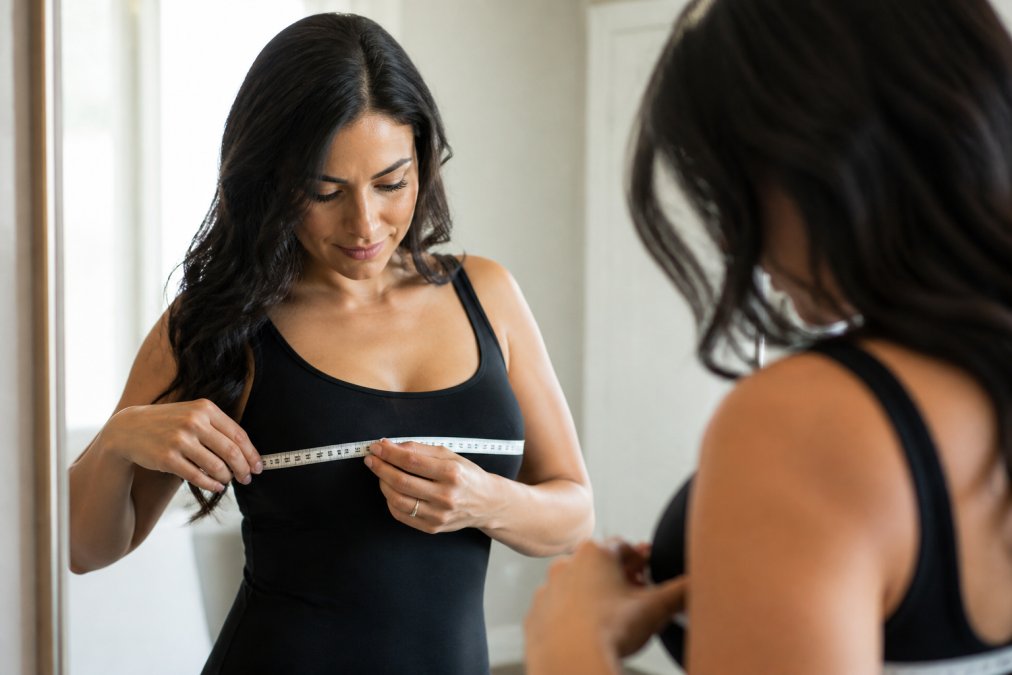
Stand straight with your arms at your sides and wear a fitted, unpadded bra or no bra. Wrap the flexible tape measure around the fullest part of your bust, keeping it parallel to the ground. The tape should sit snugly but not compress your skin, you should be able to fit one finger under the tape. Check in the mirror to ensure the tape is level all the way around, then read the measurement where the tape overlaps and write it down.
Key Takeaway
The fullest part of your bust is usually at your nipple line. If you're unsure, measure at several heights and use the largest number.
Measuring Your Natural Waistline
Your natural waist is the narrowest part of your torso, usually about an inch above your belly button. Dresses fitted at the waist rely on this measurement to sit correctly.
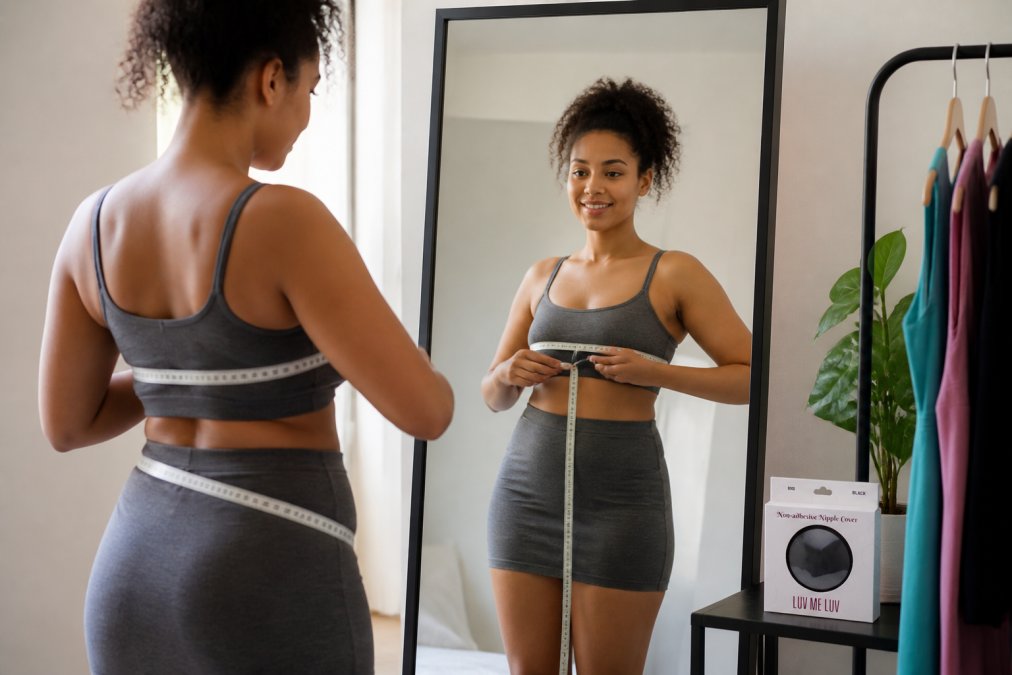
Locate your natural waist by bending slightly to the side, you'll feel a natural crease. Wrap the tape measure around your natural waist, keeping it parallel to the ground. The tape should feel snug but not tight, you should be able to breathe normally. Don't pull the tape taut; let it rest gently against your skin. A measurement taken while tensing your core will be smaller than your actual waist, and you'll order a dress that's too tight. Check the measurement in the mirror to ensure the tape is level, then write it down.
Determining Your Hip Measurement
Your hip measurement captures the fullest part of your hip and buttocks, critical for dresses with fitted skirts or silhouettes that follow your curves.
Stand with your feet hip-width apart and wrap the tape measure around the fullest part of your hips and buttocks. For most women, this sits about 7-9 inches below your natural waist. Keep the tape parallel to the ground and snug but not tight. Verify in the mirror that the tape is level, then record your hip measurement.
Watch Out
A common mistake is measuring your hips at the widest point of your hip bones rather than the fullest part of your hip and buttocks. Measure where you have the most volume, not where your bones are widest.
Additional Measurements for Dress Fit
Beyond bust, waist, and hips, several other measurements determine how a dress will look on you, especially for fitted dresses, maxi dresses, and styles with specific design details.
Inseam and Leg Length
Inseam and leg length determine whether a dress will hit your ankle, knee, or somewhere in between. Inseam is measured from your inner thigh down to your ankle, relevant for maxi dresses and long skirts.
Wear the shoes you plan to wear with the dress, as heel height changes where a dress hem will fall. Stand straight with your feet hip-width apart and have someone measure from your inner thigh (at the top of your leg) straight down to the floor or your ankle bone. Write down your inseam.
Torso length is the distance from the base of your neck down to your natural waist. Have someone measure from the base of your neck (where your shoulder meets your collarbone) straight down to your natural waist and record this measurement.
Shoulder Width and Torso Length
Shoulder width determines whether dress straps will sit correctly or slide off. Stand straight with your arms at your sides and have someone measure across the back of your shoulders, from the outer edge of one shoulder to the outer edge of the other. Write down your shoulder width.
For torso length, measure from the base of your neck (back) down to your natural waist. These measurements matter most for fitted dresses, crop tops paired with high-waisted bottoms, and styles where proportions are critical. At Swagg Boutique LLC, our product descriptions include these details for dresses where they affect fit.
How to Use a Size Chart for Online Shopping
A size chart is only useful if you know how to read it. The key is comparing your actual body measurements to the garment's measurements, not the size label.
Find the size chart for the specific dress you're interested in. Locate your measurements on the chart, organized by body part: bust, waist, hips, inseam, shoulder width, torso length. Look across each row to see which size accommodates your measurement. Do this for all your key measurements, you're looking for a size where your measurements fall within the range across all categories that matter to you. If your measurements span multiple sizes, choose the size that accommodates your largest measurement. You can always have a dress taken in, but you can't add fabric if it's too tight. Check if the brand offers exchanges. At Swagg Boutique LLC, we make returns and exchanges simple because we know that even with perfect measurements, sometimes a dress doesn't feel right when it arrives.
Best For
Size charts work best when the retailer provides measurements for the actual garment, not just generic size ranges. Brands that list "bust: 36 inches" for a size small are giving you actionable data.
Common Online Clothing Sizing Mistakes to Avoid
Mistake 1: Ordering based on your usual size without checking the specific brand's size chart. Every brand cuts differently. Always check the size chart for the specific dress you're buying.
Mistake 2: Measuring in loose clothing. Sweatshirts, oversized t-shirts, and baggy jeans add inches to your measurements. Measure in fitted clothing so your numbers reflect your actual body.
Mistake 3: Pulling the tape measure too tight. Measure with the tape snug but not compressing your skin. Your dress needs to fit your actual body.
Mistake 4: Ignoring the ease in the size chart. Ease is the extra room built into a garment so it fits comfortably over your body. A fitted dress has less ease (1-2 inches), while a loose dress has more ease (3-4 inches or more).
Mistake 5: Not accounting for fabric type. A stretchy jersey dress fits differently than a rigid cotton dress. Stretch fabrics feel more forgiving, while structured fabrics show every curve. If you're between sizes and the dress is stretchy, you might size down. If it's rigid, size up.
Mistake 6: Measuring yourself without help. It's harder than you think to keep a tape measure level when measuring your own body. Ask someone to help or use a mirror to verify tape positioning.
Tips for Accurate Measurements and Body Shape Variations
Measure multiple times, take each measurement twice and if the two numbers are within half an inch of each other, you're consistent. Measure at the same time of day for consistency, as your body changes throughout the day.
Account for your body shape. Not all bodies are proportional. When choosing a size, prioritize the measurement that's largest relative to the size chart. If your bust is a large and your hips are a medium, choose the large. Understand vanity sizing, many brands use vanity sizing, which means their size labels are smaller than the actual garment measurements. Don't rely on the size label; rely on the measurements.
Know your fit preferences. Do you like dresses fitted to your curves, or do you prefer a looser, more relaxed fit? Choose your size accordingly. Consider the dress's intended fit. A bodycon dress is designed to be tight and show your curves. A shift dress is designed to be loose and drape straight down. Read the product description to understand how the dress is supposed to fit.
Stretchy fabrics like jersey, spandex blends, and knits accommodate curves and forgive slight sizing mismatches. Rigid fabrics like cotton, linen, and structured weaves show every contour and require more precise sizing. If you're shopping for a stretch dress and you're between sizes, you can usually size down. If it's rigid, size up.
If you're buying from international retailers, convert their size to your country's standard. A European size 36 is roughly equivalent to a US size 4. A UK size 8 is roughly equivalent to a US size 4. Always check the conversion chart provided by the retailer.
After your dress arrives, try it on and assess the fit. If it's slightly loose at the waist but perfect everywhere else, a tailor can take in the side seams. Understanding which alterations are easy (waist adjustments, hem length, taking in side seams) and which are difficult (adding cup size, changing shoulder width) helps you know whether a dress that's slightly off can be salvaged.
Pro Tip
Keep a record of your measurements in your phone or a spreadsheet. Your body changes over time, and having a history helps you spot trends. Once you've ordered from a brand and the dress fit perfectly, note that brand's size in your spreadsheet.
Getting your measurements right transforms online dress shopping from a frustrating gamble into a confident, informed decision. You're no longer guessing based on a size label. You're comparing your actual body data to the actual garment dimensions.
When you order from Swagg Boutique LLC, every dress in our collection includes detailed garment measurements so you can match your body data to the exact dimensions of what you're buying. We also make returns and exchanges simple because we know that sometimes a dress doesn't feel right when it arrives. Join our VIP list to get 10% off your first order and exclusive early access to new drops arriving weekly. Measure yourself today, and order with confidence.
=== FAQ ANSWERS (audit these too, same rules) ===
[1] Q: What are the three main body measurements for dresses? A: The three primary measurements are bust circumference (the fullest part of your bust), natural waist (the narrowest part of your torso), and hip measurement (the fullest part of your hips). These measurements form the foundation of how to measure body for online dresses and help you match your dimensions to size charts. Most dress sizing relies on these three core measurements to determine the correct fit.
[2] Q: Should I measure myself while wearing clothes? A: Yes, you should measure while wearing form-fitting clothing like a tank top or sports bra and fitted pants. This gives you accurate body measurements that align with how garment measurements are typically taken. Avoid bulky sweaters or loose clothing, as they'll skew your measurements and lead to sizing errors. Measure directly against your skin or thin, snug-fitting layers only.
[3] Q: How do I know my dress size if I'm between sizes? A: If your measurements fall between two sizes, check the specific dress's fit guide and consider your preferences. If you prefer a more fitted silhouette, size down; if you like ease and comfort, size up. Also check the garment measurements listed for each size, some dresses may have more generous proportions in certain areas. Reading customer reviews about how a dress actually fits can help you make the right choice.
[4] Q: Does every brand have the same size chart? A: No. According to research, 75% of shoppers say sizes are inconsistent between brands, and over 80% believe size charts are inconsistent across retailers. This is why using a size chart specific to each brand is critical. Always compare your body measurements to the individual brand's size chart rather than assuming your usual size will fit. Vanity sizing and different manufacturing standards mean that a size 6 at one brand may not equal a size 6 elsewhere.
Frequently Asked Questions
What are the three main body measurements for dresses?
The three primary measurements are bust circumference (the fullest part of your bust), natural waist (the narrowest part of your torso), and hip measurement (the fullest part of your hips). These measurements form the foundation of how to measure body for online dresses and help you match your dimensions to size charts. Most dress sizing relies on these three core measurements to determine the correct fit.
Should I measure myself while wearing clothes?
Yes, you should measure while wearing form-fitting clothing like a tank top or sports bra and fitted pants. This gives you accurate body measurements that align with how garment measurements are typically taken. Avoid bulky sweaters or loose clothing, as they'll skew your measurements and lead to sizing errors. Measure directly against your skin or thin, snug-fitting layers only.
How do I know my dress size if I'm between sizes?
If your measurements fall between two sizes, check the specific dress's fit guide and consider your preferences. If you prefer a more fitted silhouette, size down; if you like ease and comfort, size up. Also check the garment measurements listed for each size, some dresses may have more generous proportions in certain areas. Reading customer reviews about how a dress actually fits can help you make the right choice.
Does every brand have the same size chart?
No. According to research, 75% of shoppers say sizes are inconsistent between brands, and over 80% believe size charts are inconsistent across retailers. This is why using a size chart specific to each brand is critical. Always compare your body measurements to the individual brand's size chart rather than assuming your usual size will fit. Vanity sizing and different manufacturing standards mean that a size 6 at one brand may not equal a size 6 elsewhere.
This article was written using GrandRanker